

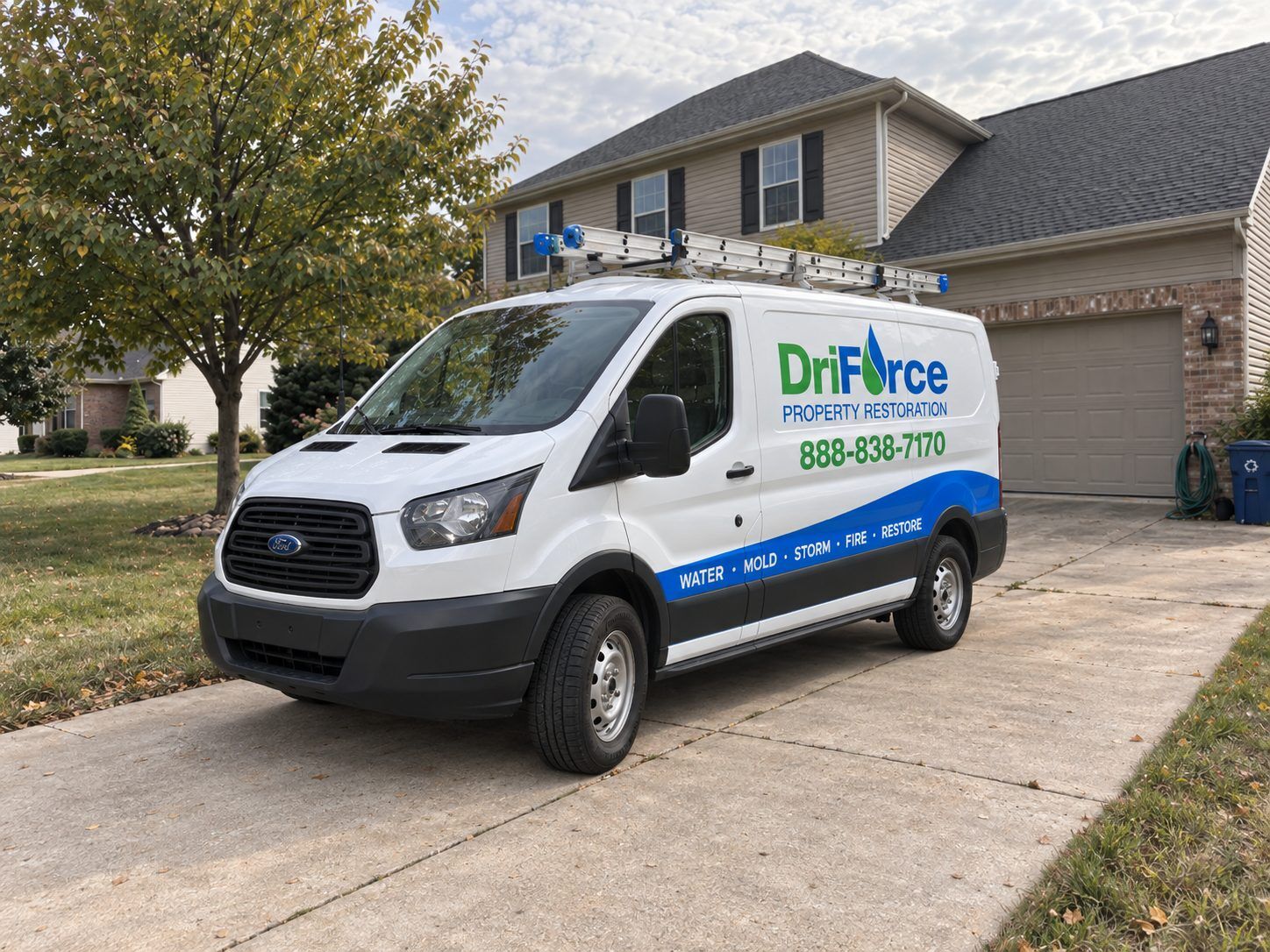
24/7 Emergency Response · Oakland County & the Blue Water Area
Residential RestorationAcross Michigan
Water, fire, mold or storm — the same licensed Michigan builder carries your home from the first emergency call through the finished rebuild. No handoff to a contractor halfway through, and no gap in the claim where two companies blame each other.
What you get
- On site in 60 minutes
- One builder, cleanup through rebuild
- Contents packed out and inventoried
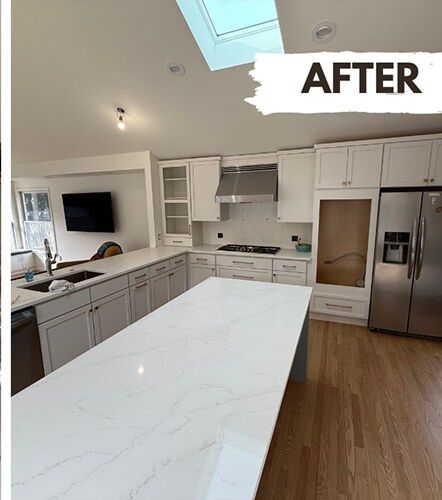
Residential Restoration · Metro Detroit & the Blue Water Area
One Team, Start To Finished.Residential Restoration Water, Fire, Mold, Storm & Frozen Pipe Damage In Troy, MI & Beyond
Water, fire, mold or storm — the same licensed Michigan builder carries your home from the first emergency call through the finished rebuild. No handoff to a contractor halfway through, and no gap in the claim where two companies blame each other for the timeline.
- Cleanup, drying and rebuild under one contractor
- Your belongings protected, packed out or covered
- Finishes matched so repairs do not announce themselves
- We tell you honestly whether you can stay in the house
 Trusted across Metro Detroit
60-Min Response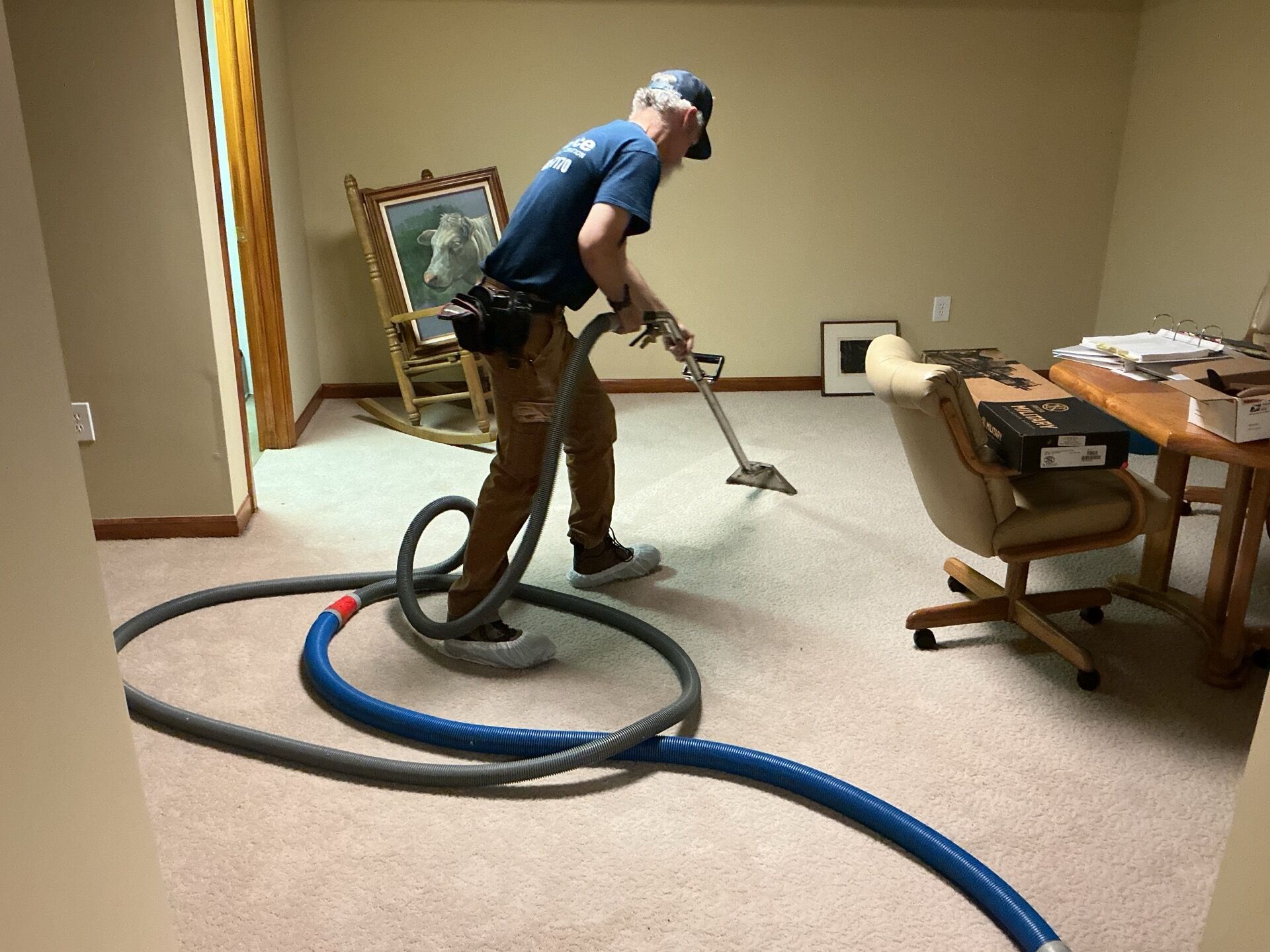
What Happened To Your Home?
Go straight to what you are dealing with — or call and describe it and we will work it out. The same team handles every one of these, and the rebuild afterwards.
Tell Us What Happened
You do not need to know what kind of loss it is or what to call it — describe what you are seeing and we will work it out. A real person answers 24/7. Prefer to type it? Send the details and we respond the same day.

The Question Nobody Answers: What Happens To Your Life Meanwhile?
Every restoration company will tell you how fast they respond. Almost none will tell you whether you can sleep in your house tonight. That is the thing you actually want to know, and the honest answer depends on three things: whether the building is safe, whether the affected area can be contained, and whether the kitchen and a bathroom still work.
For a contained loss — one room, one floor, no structural or electrical involvement — most families stay, and we work around that with protected routes and containment. For larger losses, or anything affecting power, water, heat or structure, staying is usually neither safe nor bearable, and the right move is to go early rather than endure a week and leave anyway.
If you do have to leave, additional living expense coverage is part of most homeowners policies and it pays for the hotel, the rental, meals above your normal grocery spend and even boarding a pet. It is also routinely underclaimed, because nobody keeps the receipts from week one. We will tell you to start that file on day one, because it is your money and it is easy to lose.
From Your Call To Your Home Restored
One team, one scope, one point of contact — so you are never the person coordinating between companies while living out of a suitcase.
1A person answers, and a crew leaves
Day or night. A certified crew leaves Troy or Port Huron immediately — on-site within 60 minutes, equipped to stop the damage spreading before anything else is decided.
2Make safe and stop the source
Electrical hazards addressed, the water shut off, the opening tarped, the area secured. Nothing else can happen while the loss is still in progress.
3Document before anything moves
Photographs, moisture readings and a written scope, recorded the way your carrier needs to see it. This is the record your whole claim is settled on, and it cannot be recreated afterwards.
4Protect your belongings
Contents covered in place, moved out of the affected area, or packed out and inventoried where the work requires it. Shoe covers, floor protection and containment on the routes we use through your home.
5Dry, clean and monitor daily
Extraction and structural drying with logged daily readings against a documented goal, plus cleaning and odor treatment appropriate to the type of loss. You get plain-English updates on what is happening and why.
6Rebuild and match what was there
Drywall texture, flooring, trim and paint matched into the existing surfaces by the same licensed Michigan builder, so the repaired areas do not announce themselves. Then a walkthrough, a punch list, and a written workmanship warranty.
Three Things Homeowners Lose Money On, Every Time
Most underpaid residential claims are not disputed claims. They are claims where something was never documented, or a second payment was never asked for.
DIFS also warns homeowners to be careful with the word “flood” when reporting a loss — it has a specialized meaning that points at an exclusion. A burst pipe or a roof leak is water damage. Describe what actually happened and ask what coverage applies.Michigan DIFS consumer guidance. DIFS Consumer Services: 877-999-6442.
Straight Answers For Homeowners
On a covered loss your deductible is generally all you pay out of pocket, and we settle the covered work directly with your carrier. If you choose to upgrade materials during the rebuild — often the cheapest moment you will ever get — that difference is quoted separately and agreed before it is built.
What actually drives the number is how long the damage went unfound and how much has to be removed rather than dried or cleaned in place. A loss caught the same morning and one found after a weekend away are not the same job, whatever caused them.
Sometimes we will tell you not to file. If the damage is small, caught early and the repair is close to your deductible, a claim may not be in your interest, and we would rather say so than start one. You get the documented scope and the number first, and the decision stays yours. The inspection and the scope come with no obligation.
For adjusters, agents & property managers: residential losses documented the way they need to be defended — time-stamped photo sets from the first hour, moisture mapping with logged daily readings, contents inventories, and line-item scopes in carrier-ready format, with mitigation and reconstruction on one file. Call (888) 838-7170 or use our contact page and reference your claim number.
What Our Customers Say
4.9181 Google Reviews
“We woke up on a Monday morning to a totally flooded basement, malfunctioned hot water tank — not only did he calm me down, he had a team onsite within the hour.”
Kathy · Google Review
“The only restoration company that picked up the phone at around 11:30pm when we found our basement flooded. Casey and Harold did great job. Impressed!”
Agnes · Google Review
“Dri-Force did an outstanding job restoring my basement post-flood. Excellent communication. Excellent planning. Quick. Clean. Responsive to everything we asked.”
Jack · Google Review
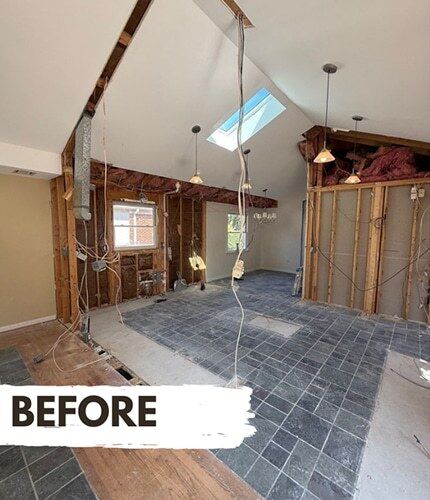
Before, During, And Finished
Our own crews, our own photographs. Most restoration websites will show you a stock photo of a fan on a floor; these are real Michigan jobs.
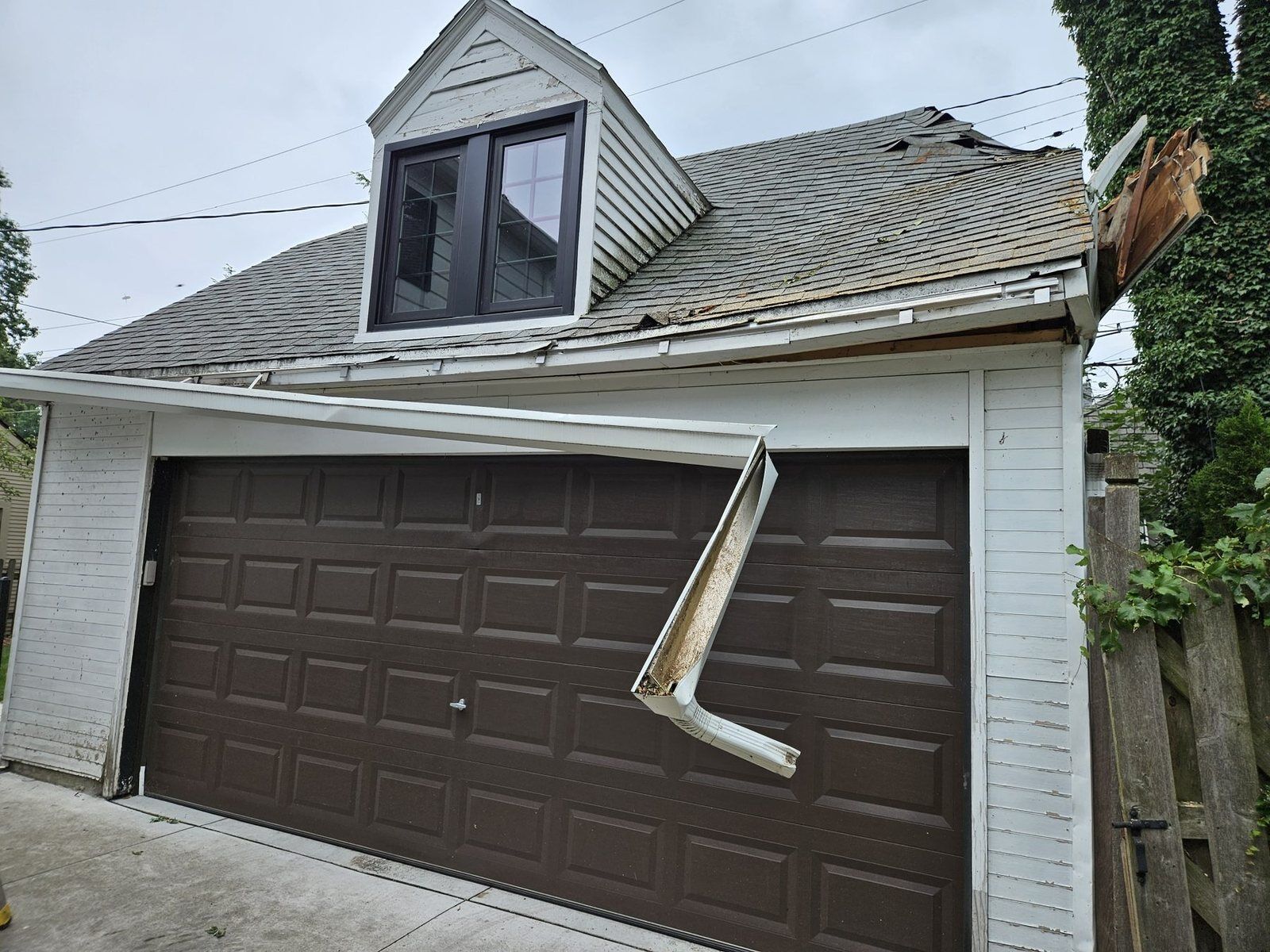
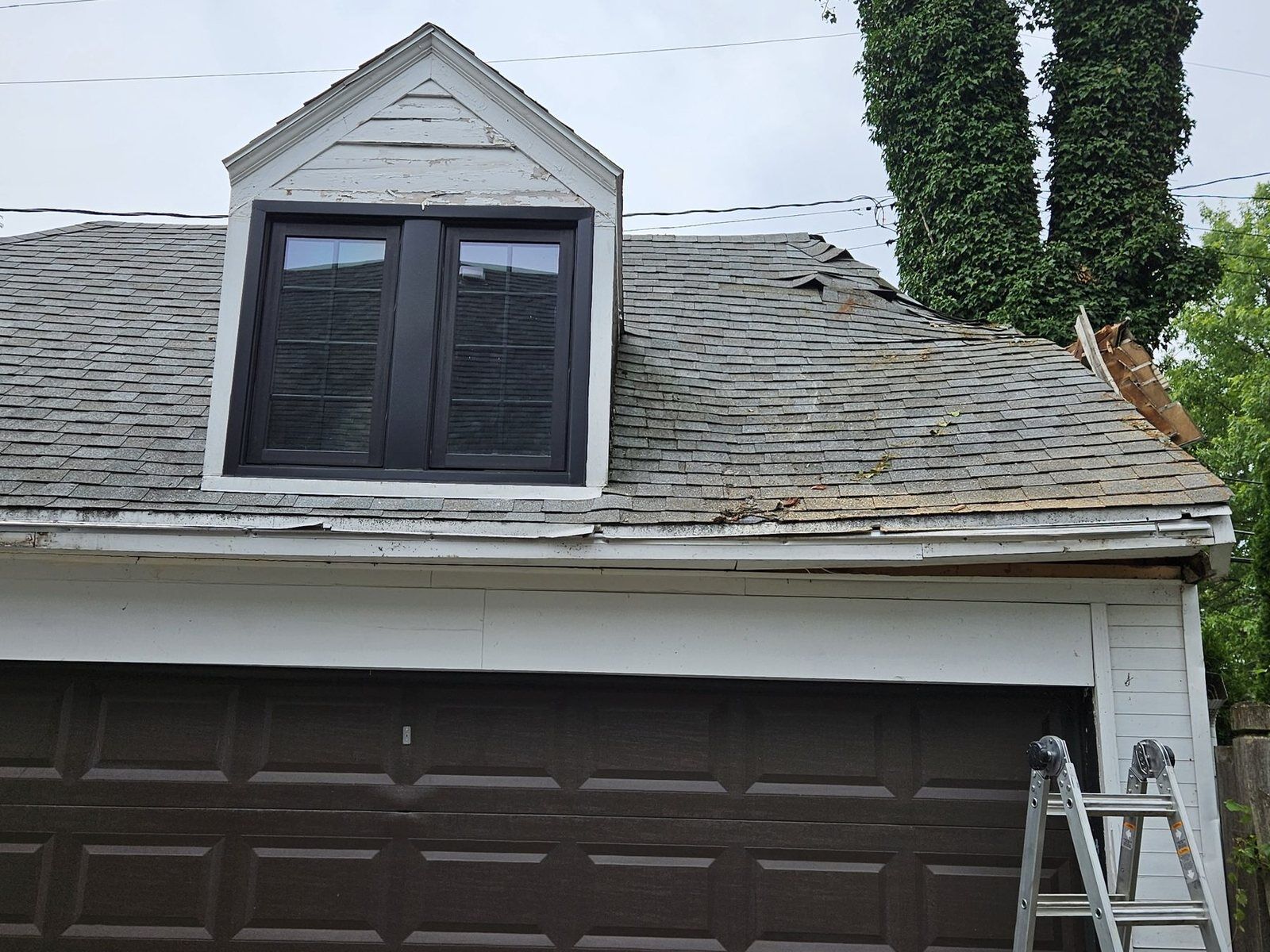
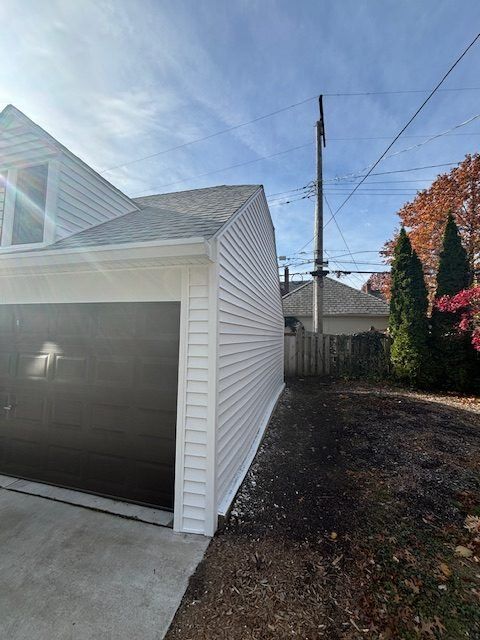
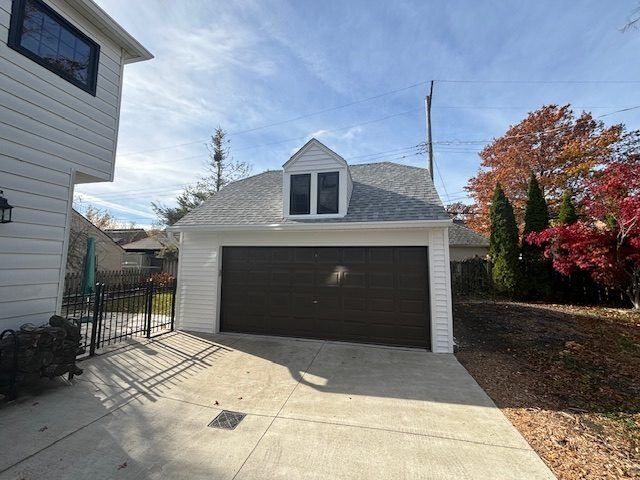
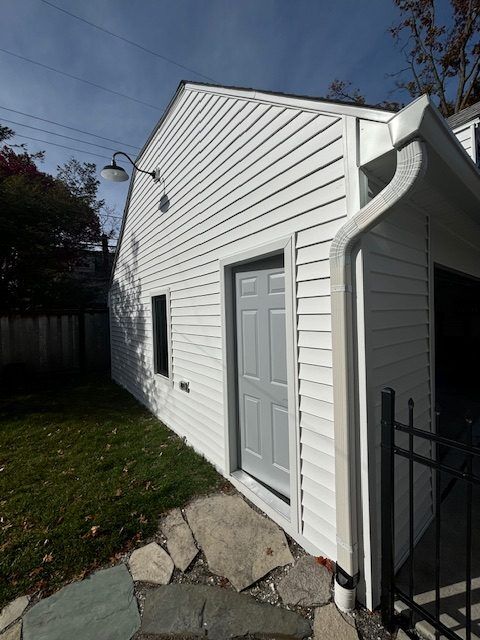
Storm-Damaged Garage, Rebuilt From The Sheathing Out
Wind took the siding off the elevation and opened the structure to weather. Exterior damage of this kind is deceptive: the visible problem is cosmetic, and the real problem is that the building envelope is no longer closed.
The sequence was secure it, open it up far enough to see what the wind actually reached, repair the sheathing and framing underneath, then rebuild the envelope and finish it. The last two photographs are the same structure as the first.
Scope of work
- Emergency securing of the opened structure
- Damage assessment and carrier documentation
- Removal of damaged siding and trim
- Sheathing and framing repair
- New siding, soffit and fascia
- Roof and flashing detail as required
- Finish trim and paint
- Final walkthrough and punch list
What It Actually Looks Like To Have Us In Your House
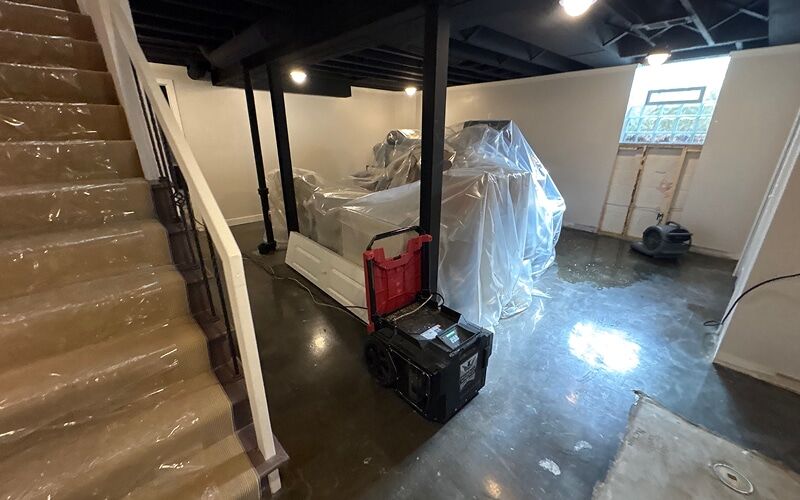
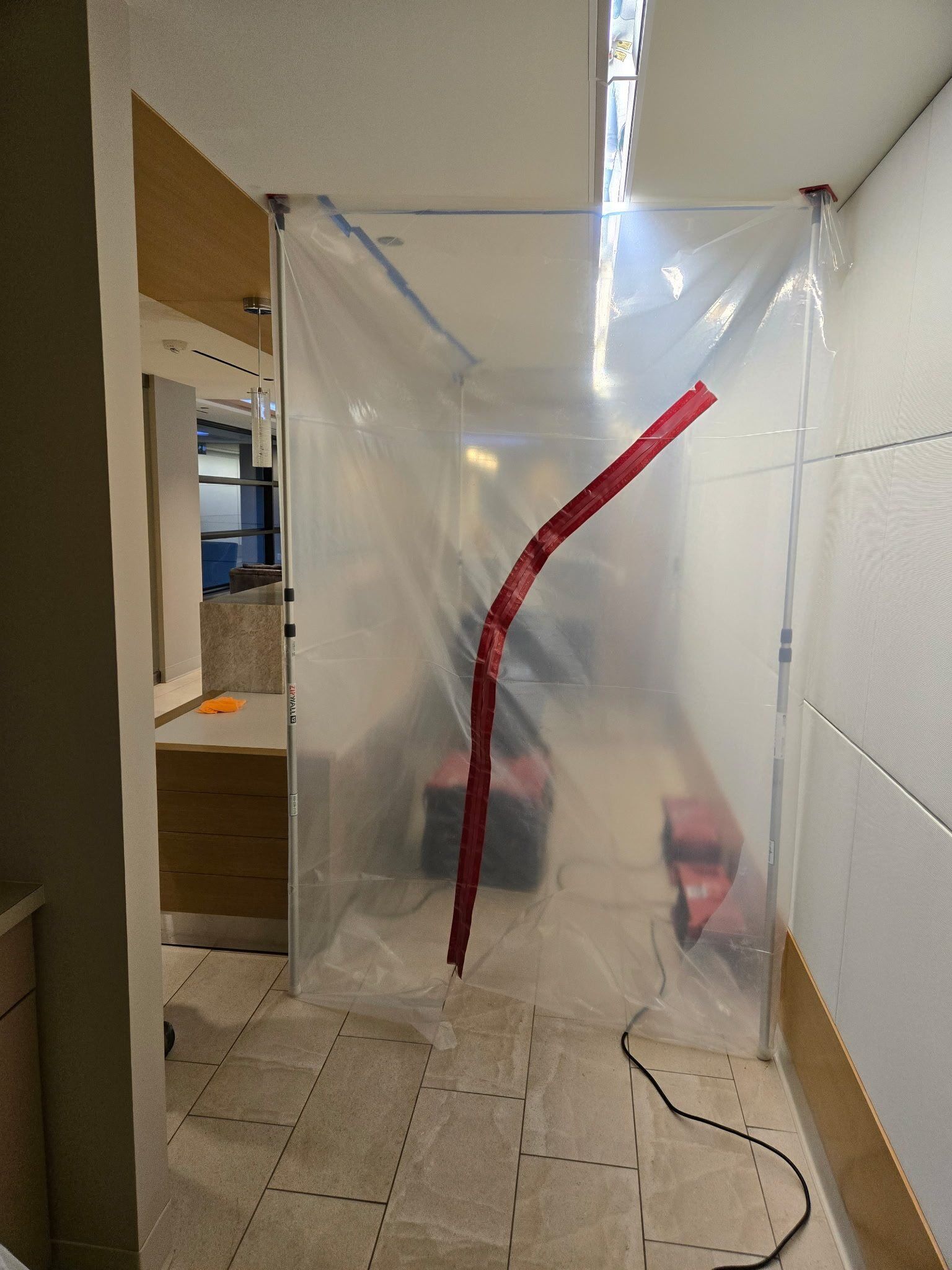
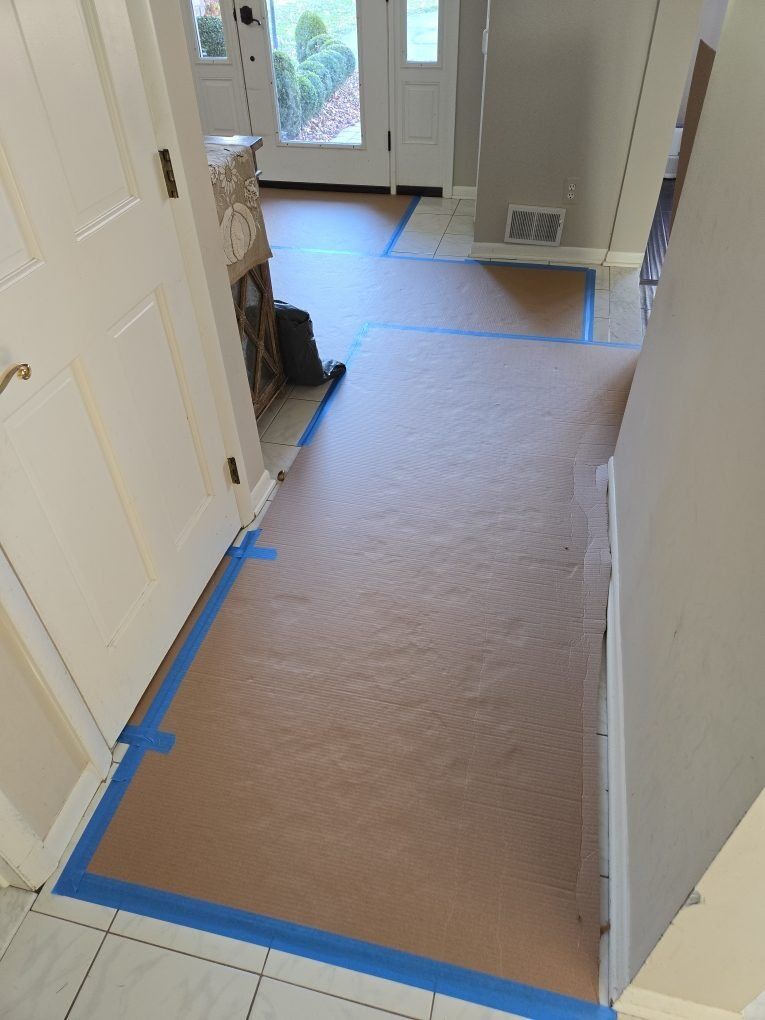
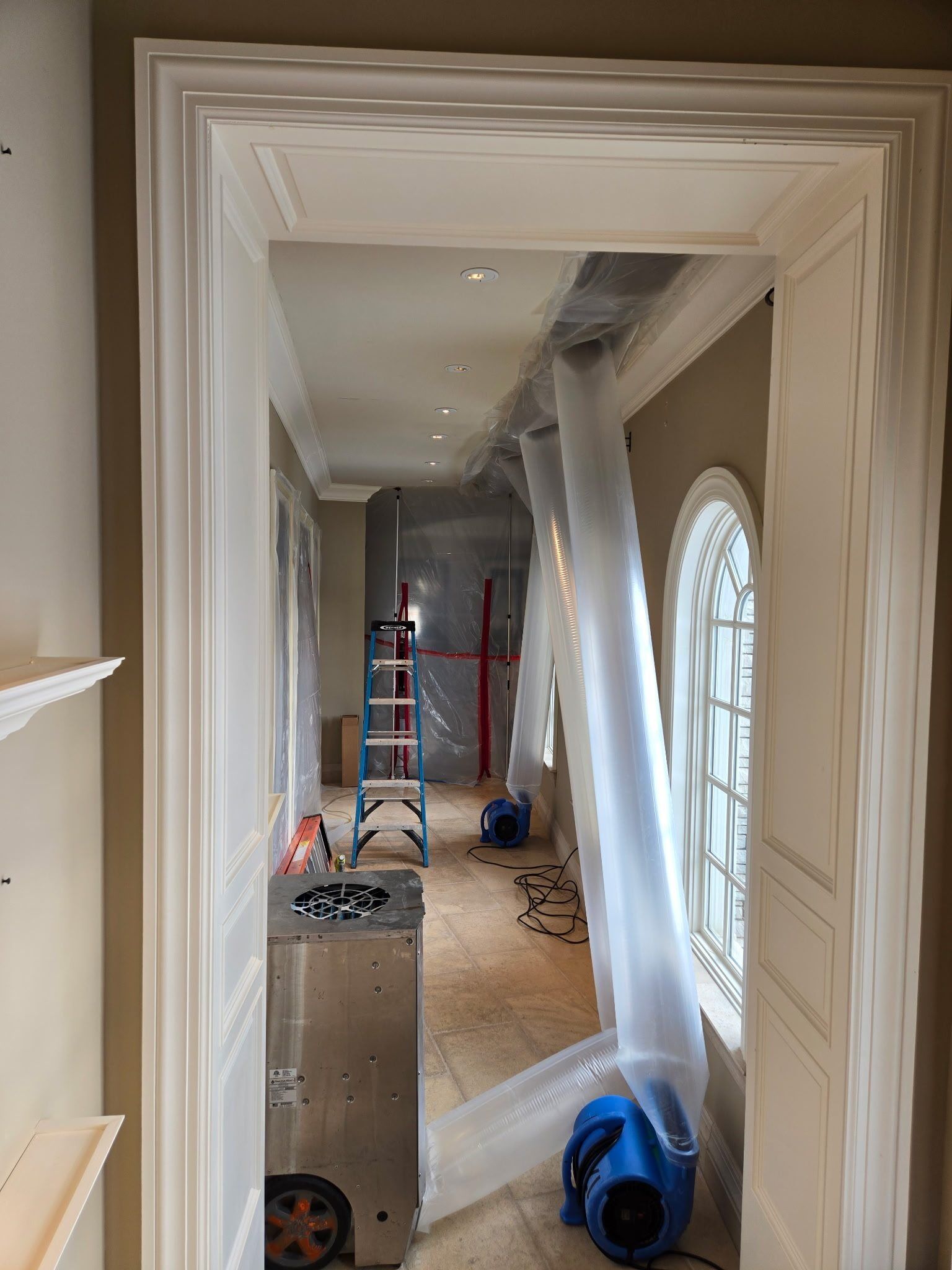
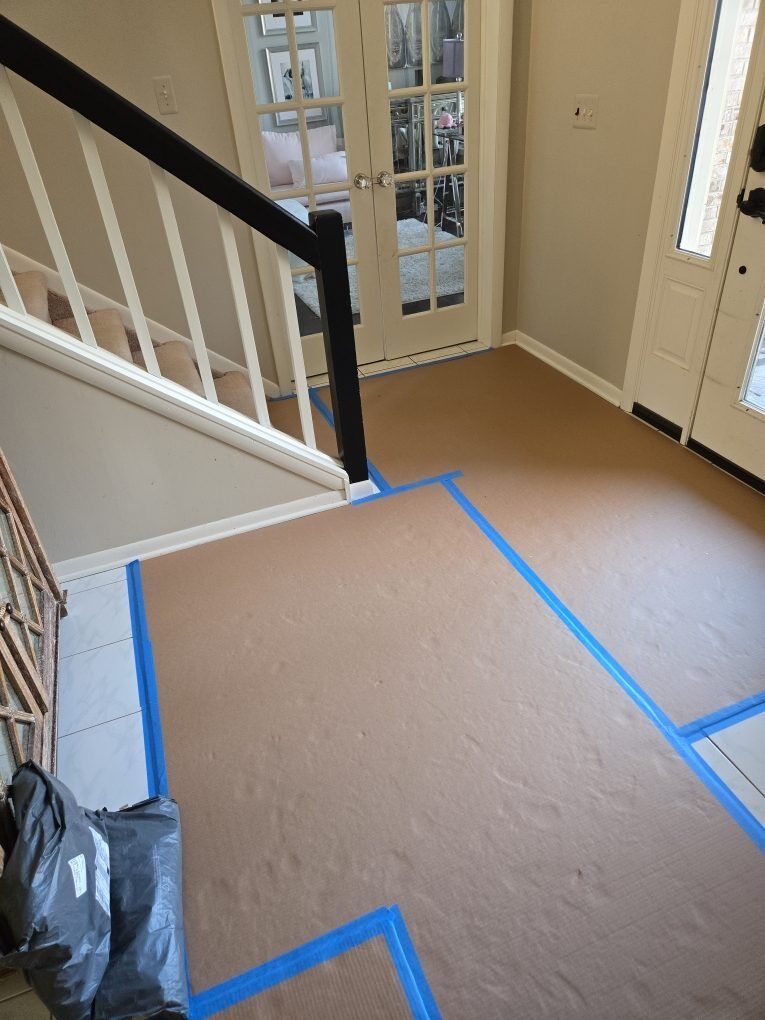
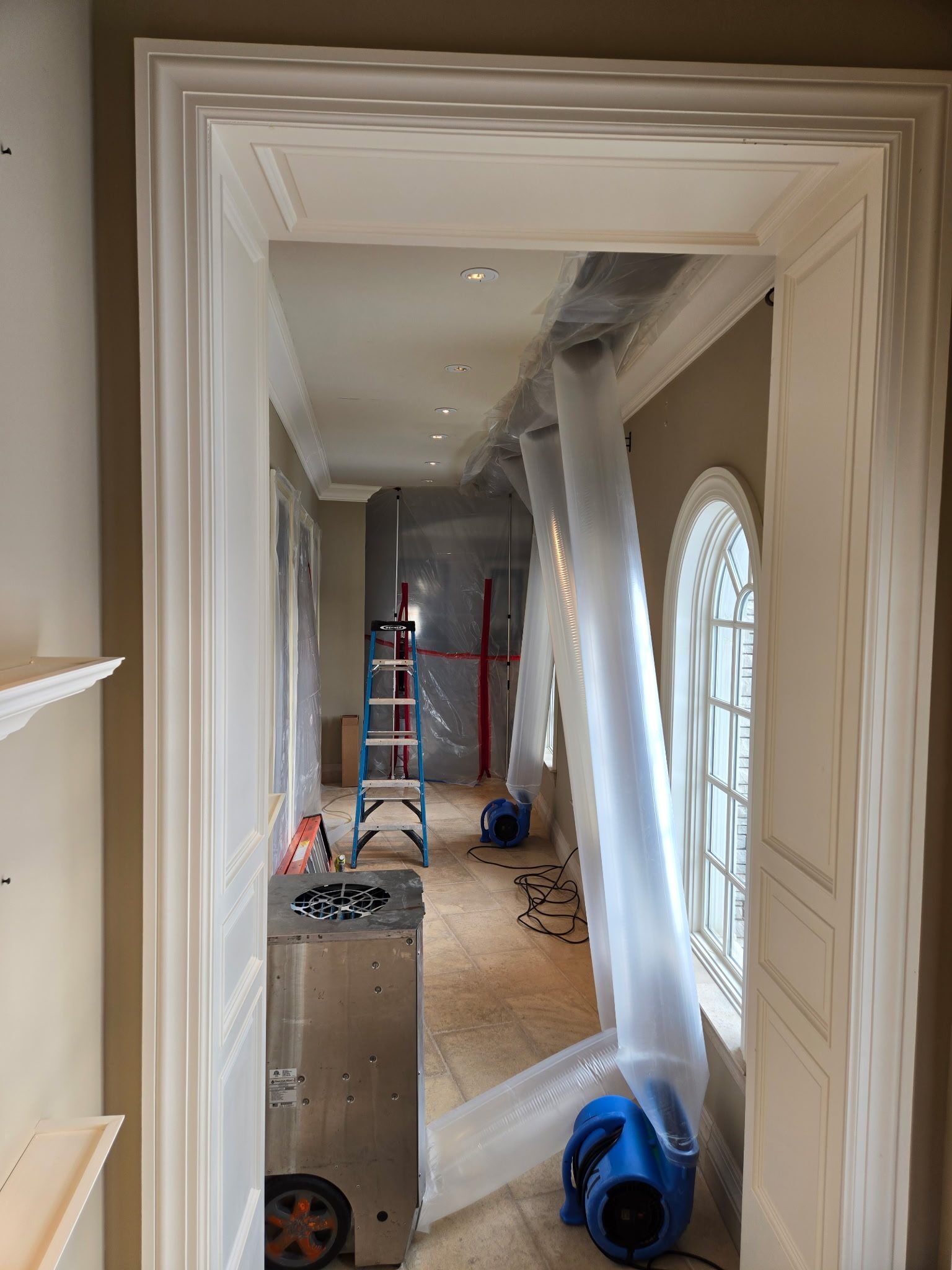
The question underneath every other question a homeowner asks is what we are going to do to the rest of the house while we work. It is a fair question and it is usually answered with adjectives, so here it is answered with photographs.
Sealed containment with a zip-door entry isolates the work area so dust and air do not travel into rooms nobody has been in. Protected routes are laid and taped along every path our crews use. This is standard on our jobs, not something reserved for expensive houses — these happen to be both.
Scope of work
- Sealed poly containment with zip-door entry
- Negative air and HEPA filtration where required
- Protected flooring along all work routes
- Stair and banister protection
- Contents covered in place or packed out
- Daily clean-down of shared areas
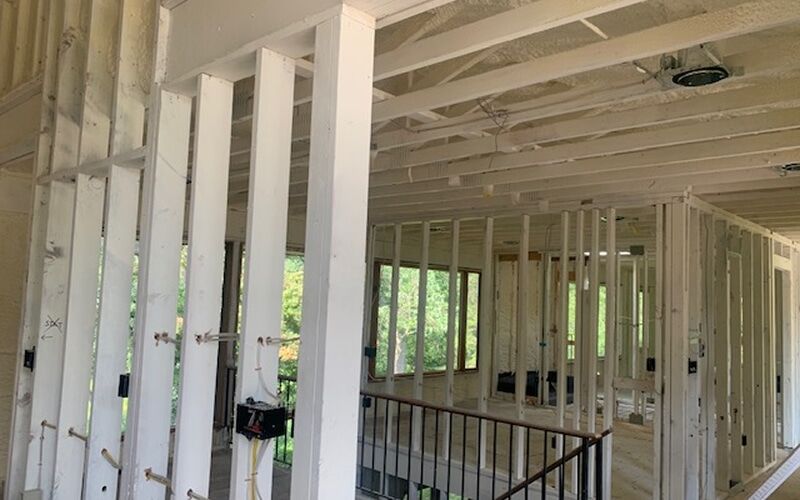
Homes We Have Put Back Together
Residential work across Metro Detroit and the Blue Water Area.
Six Types Of Loss, One Team
Whatever happened, the same crews handle it — and the same licensed builder puts the house back together afterwards.
- Water damageBurst supply lines, failed water heaters, appliance leaks, roof leaks and sewer backups. Extraction, structural drying with logged readings, and removal of material that cannot be dried in place. See water damage restoration.
- Fire and smokeSmoke and soot travel far beyond the burn, through ductwork and wall cavities into rooms the flames never reached. Board-up, soot removal, odor treatment at the source and reconstruction. See fire damage.
- MoldAlmost always the result of water that was never properly dried. Containment first, removal at the source, HEPA filtration, and fixing the moisture that fed it — without that last part it comes back. See mold remediation.
- Storm and wind damageWind, hail, fallen trees and winter storms. Documented before the tarp goes on so securing the property never costs you the claim. See storm damage and emergency tree removal.
- Frozen and burst pipesA Michigan winter specialty, and the one where the flooding starts when the ice thaws rather than when the pipe breaks. Low-temperature drying for buildings without heat. See frozen and burst pipes.
- Your belongings, not just the buildingContents cleaning, inventory, pack-out and storage, plus document and photograph recovery that most regional restorers do not offer. See contents restoration.
Everything Else Worth Knowing As A Homeowner
Can We Stay In The House?
The honest test is three questions. Is it safe? Structural damage, compromised electrical, gas involvement or contamination mean no, regardless of how contained the area looks. Can the work be isolated? A single room or floor can usually be contained so the rest of the house stays usable. Do the essentials still work? A kitchen, a working bathroom, heat in a Michigan winter.
If all three are yes, most families stay, and we plan the work around that — protected routes, containment, and equipment placed so you can live around it. Drying equipment is loud and it runs continuously, which is worth knowing before you decide.
If the answer to any of them is no, leaving early is almost always better than enduring a week first and then leaving anyway. It is also usually cheaper for your carrier, because the work goes considerably faster in an empty house.
Additional Living Expense: Your Money, Easily Lost
If your home is not fit to live in, most homeowners policies include additional living expense coverage — ALE. It is separate from the money that repairs the building, and it exists to keep your life running at roughly the standard it was at before.
It typically covers the hotel or rental, meals above what you would normally have spent on groceries, extra mileage if you are commuting further, laundry, storage and often pet boarding. What it does not cover is an upgrade in lifestyle — it restores your normal, it does not fund a better one.
The reason it goes unclaimed is mundane: nobody keeps the receipts from the first chaotic week, and by the time anyone mentions ALE the record is gone. Start a folder or a phone album on night one and put every receipt in it. Note also that ALE usually has both a limit and a time period, so ask your adjuster what yours are early rather than discovering them late.
How Long Does Restoration Actually Take?
Two phases, and people conflate them constantly. Mitigation — stopping the damage, extraction and structural drying — is usually a matter of days, and it is driven by physics: material is dry when the readings say it is dry, not when the schedule says so.
Reconstruction is the long pole, and it is driven by scope, insurance approvals and material lead times rather than by crew size. A single room is typically weeks; a multi-room or full-floor rebuild runs longer; a major structural rebuild longer still.
The delays that genuinely hurt are almost always approvals rather than labor — a supplement waiting on an adjuster, or a scope that was never written properly in the first place. That is the strongest practical argument for one contractor carrying both phases: the rebuild scope is written by the people who saw what was behind the wall.
Choosing A Restoration Contractor Without Regretting It
You are choosing under pressure, often within hours, which is exactly the condition this industry’s worst operators rely on. A few checks cost almost nothing.
Ask for the Michigan builder license number if reconstruction is involved, and verify it with the state — it takes two minutes. Ask whether they do the rebuild themselves or hand you off afterwards, because that handoff is where claims stall. Ask for proof of liability and workers’ compensation coverage. And ask for a written scope rather than a single figure.
Two things should end the conversation: anyone who asks you to sign your insurance check over, and anyone who wants full payment up front. Michigan DIFS names both as warning signs. And remember that you choose the contractor, not your insurer — a preferred-vendor suggestion is a suggestion, and you are allowed to say no.
Residential Restoration, Answered
Everything Here Is Verifiable
Most restoration companies tell you they are certified. This is what we actually hold, and where you can check it yourself before you let anyone into your home.
- Applied Structural Drying Technician (ASD)
- Applied Microbial Remediation Technician (AMRT)
- Water Damage Restoration Technician (WRT)
- Fire & Smoke Damage Restoration Technician (FSRT)
- Odor Control Technician (OCT)
- Trauma & Crime Scene Technician (TCST)
- Health & Safety Technician (HST)
We also hold the IICRC Mold Removal Specialist designation. All of it is listed publicly in the IICRC Global Locator under our legal entity, Absolute Water Removal, LLC dba DriForce Property Restoration — look us up before you call, not after.
dba DriForce Property Restoration
Residential Services & Nearby Communities
Whatever happened to your home, the same crews handle it — and respond to every community we serve, day or night.
Start with the kind of damage you have: water damage, fire and smoke, mold, storm damage, frozen and burst pipes, emergency tree removal, contents restoration, roofing, or rebuild and property repairs. Crews dispatch 24/7 from our Troy office for Oakland, Macomb and Wayne counties and our Port Huron office for St. Clair County and the Blue Water Area.
Let’s Get Your Home Back
A person will answer, and a crew will be on the way. You do not need to know what kind of loss it is or what to call it — describe what you are seeing and we will take it from there. And before you tidy anything up: photograph it first, and keep every receipt from tonight onwards.